Buying an older home is exciting, but it comes with risks that aren't always visible during a viewing. As a Chartered Structural Engineer, I've surveyed hundreds of properties across Dublin and beyond, and the same issues come up again and again.
Cracking patterns matter. Not all cracks are serious, but the location, width, and direction of cracking tell a story. Diagonal cracking around windows and doors can indicate foundation movement. Horizontal cracking in blockwork walls may point to lateral loading issues or sulfate attack.
Check the roof structure. In many older Irish homes, the roof was built with timbers that may not meet current standards. Look for sagging ridgelines, spread at the eaves, and signs of timber decay, especially in valley gutters and at wall plate level.
Dampness is not always what it seems. Rising damp is frequently misdiagnosed. In many cases, what appears to be rising damp is actually condensation, penetrating damp from failed external details, or residual construction moisture. A proper diagnosis saves money.
Ask for a structural report. A general survey from an auctioneer or estate agent is not the same as a structural inspection by a Chartered Engineer. If you're spending hundreds of thousands on a home, a few hundred euro on an independent structural report is money well spent.
If you're considering purchasing a second-hand property and want peace of mind, get in touch for an independent structural inspection.
Need help with your project?
Start with a project analysis or book a consultation to discuss your next steps.
Related Articles
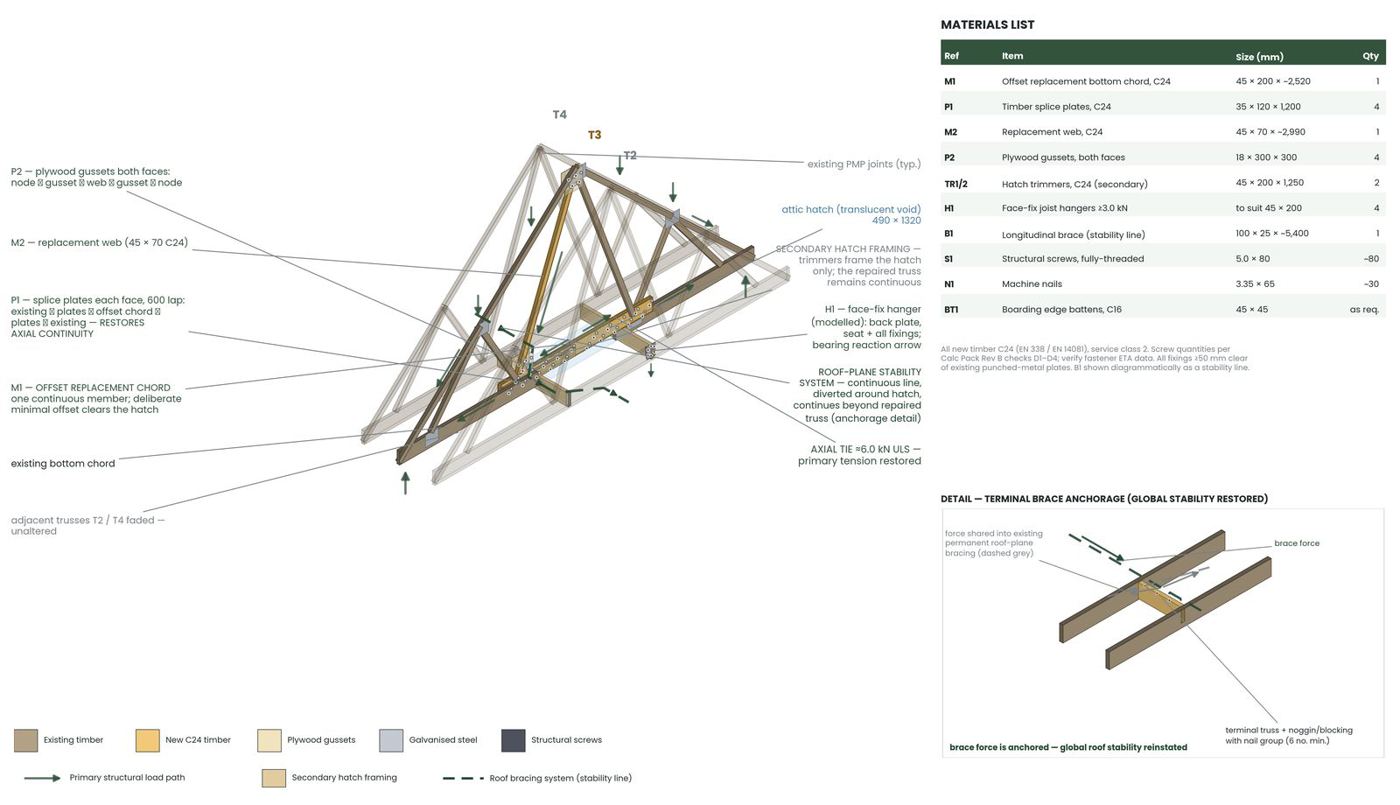
The Cut Truss: Diagnosing and Repairing an Altered Attic Hatch
A purchaser's survey found a roof truss cut to make room for an attic hatch. Here's how we assessed it, designed the repair and signed it off.
Read more
Vacant Property Grant vs Derelict Property Grant: What You Need to Know
A practical guide to understanding the difference between the Vacant Property Refurbishment Grant and the Derelict Property Grant: eligibility, documents, timelines, and common mistakes.
Read more